A Beginner's Guide to Tyneside Food: 10 Local Dishes and Where to Try Them
Tyneside food is not fancy, and it has never pretended to be. It is a flat loaf with a dent in the middle, yellow peas cooked down with a ham hock, and a dish of potatoes and onions that has been in the oven since early afternoon. Ask anyone from Newcastle, Gateshead, Wallsend or North Shields what they grew up eating and you get a short, specific list, usually delivered with a grin. What follows is ten of those dishes, what they actually are, and how to try them without guessing.
The Ten Dishes at a Glance
Half the difficulty with local food is that nobody explains it, and the other half is that the same dish turns up under three different spellings. Here is the short version.
- Stottie — a large, flat, soft round loaf, the region's sandwich bread.
- Ham and pease pudding stottie — the signature sandwich, and the best place to start.
- Pease pudding — split yellow peas cooked with ham, spooned warm or sliced cold.
- Panackelty — potatoes, onions and meat baked slowly in one pot.
- Pan haggerty — sliced potato, onion and often cheese, fried and finished until crisp.
- Singin' hinny — a griddle cake with currants, split warm and buttered.
- Kippers — herring split and smoked, from the North Shields and Craster smokehouses.
- Fish and chips — haddock, proper batter, and a walk along the coast to eat them.
- Butcher's sausages — thick, coarse-ground pork links from a local counter.
- Newcastle Brown Ale or a mug of Ringtons tea — the drink to finish on.
What Makes Tyneside Food Different?
Tyneside cooking grew out of work and weather. It is not a cuisine of delicate sauces or tiny plates. It is food for shipyard shifts, pit shifts, cold mornings and long walks home. That means cheap cuts of meat, root vegetables, flour, oats, peas and potatoes. The River Tyne gave the region fish, but it also gave it industry, and the food reflects both: filling, thrifty, and designed to be eaten with a mug of tea.
Another thing that sets it apart is the language. A stottie is not a bap, a barm, a cob or a barm cake. Pease pudding is not mushy peas, even if they look related in the bowl. Panackelty and pan haggerty are cousins, not twins. If you ask for the wrong thing, you will still get fed, but you may get a look. That is part of the experience.
Pease pudding is not a side. It is a decision.
The Dishes in Detail
1. Stottie
A stottie is a large, flat, round loaf, baked slowly so it stays soft, with a dimple in the middle from where it was turned or pressed. It is the region's sandwich bread. You split it, butter it, and fill it with almost anything: ham, cheese, bacon, egg, corned beef, chips. The best stotties are slightly dense but not heavy, with a soft crumb that soaks up gravy or pease pudding without falling apart.
Where to try it: proper local bakeries, the Grainger Market in Newcastle, Quayside Sunday Market, Tynemouth Market, and even Greggs, which began in Newcastle and still sells a version. If you want the real thing, go to a market bakery and ask for a fresh stottie, not a plastic-wrapped one.
2. Ham and Pease Pudding Stottie
This is the signature sandwich and the best introduction to Tyneside food. Warm pease pudding is spread inside a split stottie, then topped with ham, often with a little butter or mustard. It is simple, filling and deeply savoury. The first bite tells you everything about the local approach: no fuss, no garnish, just good ingredients doing a job.
Where to try it: the Grainger Market, local delis, market stalls, and proper pubs such as The Broad Chare in Newcastle, which takes North East food seriously. If you see it on a specials board, order it.
3. Pease Pudding
Pease pudding is made from split yellow peas, soaked and simmered with a ham hock or bacon until soft, then seasoned. Warm, it is spoonable and comforting. Cold, it sets firm enough to slice and fry, which is how many people use leftovers. It is often served with boiled bacon, ham, or in that famous stottie. It is not mushy peas, though they share a colour.
Where to try it: butchers, delis and market stalls across Tyneside. The Grainger Market is a reliable starting point. Buy a tub, take it home, and fry slices in a little butter until crisp at the edges.
4. Panackelty
Panackelty — also spelled panacalty or panackelty, depending on who you ask — is a slow-baked dish of potatoes, onions and meat. The meat might be corned beef, bacon, lamb or leftover roast. Everything goes into one pot and bakes until soft, sometimes with a suet crust on top. It is a leftover dish in the best sense: practical, cheap and deeply satisfying.
Where to try it: old-school pubs and cafes, especially in Gateshead, North Shields and the Ouseburn. It often appears on specials boards in autumn and winter. If a pub is serving it, the odds are good that the rest of the menu is worth your time too.
5. Pan Haggerty
Pan haggerty is the quicker cousin of panackelty. Sliced potatoes and onions are layered in a pan, often with cheese, then fried and finished until the bottom is crisp and golden. It can be a side dish or a main, depending on how hungry you are and what else is on the plate. Think of it as a North East potato cake, but bigger and more generous.
Where to try it: pubs, cafes and proper breakfast spots. It is excellent with bacon, a fried egg, or as a side to a roast. Look for it in North Shields, Whitley Bay and around Tynemouth.
6. Singin' Hinny
Singin' hinny is a griddle cake or flat scone, studded with currants, cooked on a bakestone or in a heavy pan. The name comes from the sizzling sound it makes as it cooks. It is split warm, buttered, and eaten with tea. It is sweet but not sugary, and it belongs to the same family as Welsh cakes and other griddle breads.
Where to try it: bakeries, tearooms, Tynemouth Market and weekend food markets. If you find one still warm, eat it before it cools. That is not a suggestion; it is the law.
7. Kippers
A kipper is a herring, split and smoked. North Shields and Craster are famous for them. Good kippers are glossy, smoky and salty, best grilled and served with buttered bread, a slice of lemon if you like, and a strong pot of tea. They are not for everyone, but they are one of the region's great breakfasts.
Where to try it: North Shields Fish Quay, the smokehouses at Craster, and Tynemouth Market. If you are unsure, order one and share it. If you love it, order two next time.
8. Fish and Chips
Haddock is the local choice for fish and chips. The batter should be crisp, the chips should be thick, and the whole thing should be eaten quickly, ideally outdoors, with salt and vinegar. Mushy peas are optional. A pickled onion is not. The coast is the best dining room: sit on a wall, watch the river or the sea, and try not to lose a chip to the gulls.
Where to try it: North Shields Fish Quay, Whitley Bay, Tynemouth and the surrounding suburbs. Every local has a favourite chippy, and they are all prepared to argue about it. Choose a busy one with a queue of people who look like they know what they are doing.
9. Butcher's Sausages
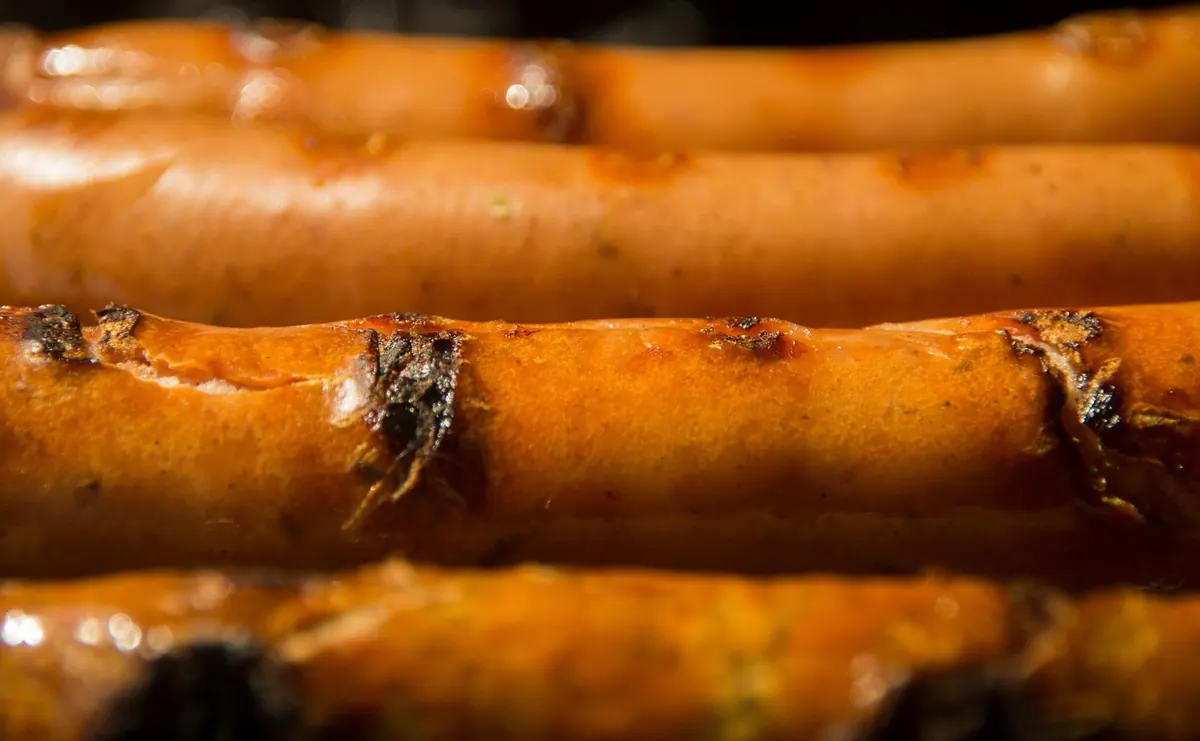
Tyneside butcher's sausages are thick, coarse-ground pork links, not the uniform supermarket kind. They are seasoned with pepper, herbs and sometimes sage or apple. They are built for a fry-up, a sausage sandwich, or bangers and mash with onion gravy. The texture is the point: you can tell they were made by someone, not a machine.
Where to try them: local butchers in the Grainger Market, Jesmond, Heaton, Gosforth and North Shields. Ask for their own pork sausages, not the cheapest ones. Take them home, cook them slowly, and do not prick them.
10. Newcastle Brown Ale or a Mug of Ringtons Tea
Newcastle Brown Ale, often called "Broon", is the famous local beer. It is malty, slightly sweet and best served cold. Ringtons is a tea company founded in Newcastle, and its tea is still sold in supermarkets and served in cafes across the region. One is for the end of the night; the other is for every other part of the day.
Where to try them: almost any pub for Newcastle Brown Ale, and cafes, tearooms and
Photo: Wok Stop London / Pexels